
Guest post by James Wetzel
What started as a simple idea to help my family understand the CMS experiment grew into a project that brought 3D models of the CMS detector into classrooms, universities, and even pop culture! It’s incredible to see how these models continue to spark curiosity and make particle physics more tangible to people around the world, even now more than 10 years later!
Circa 2014 I was just about to receive a PhD in physics from the University of Iowa after working on the CMS experiment, and 3D printing was just starting to become something “regular” people could do.
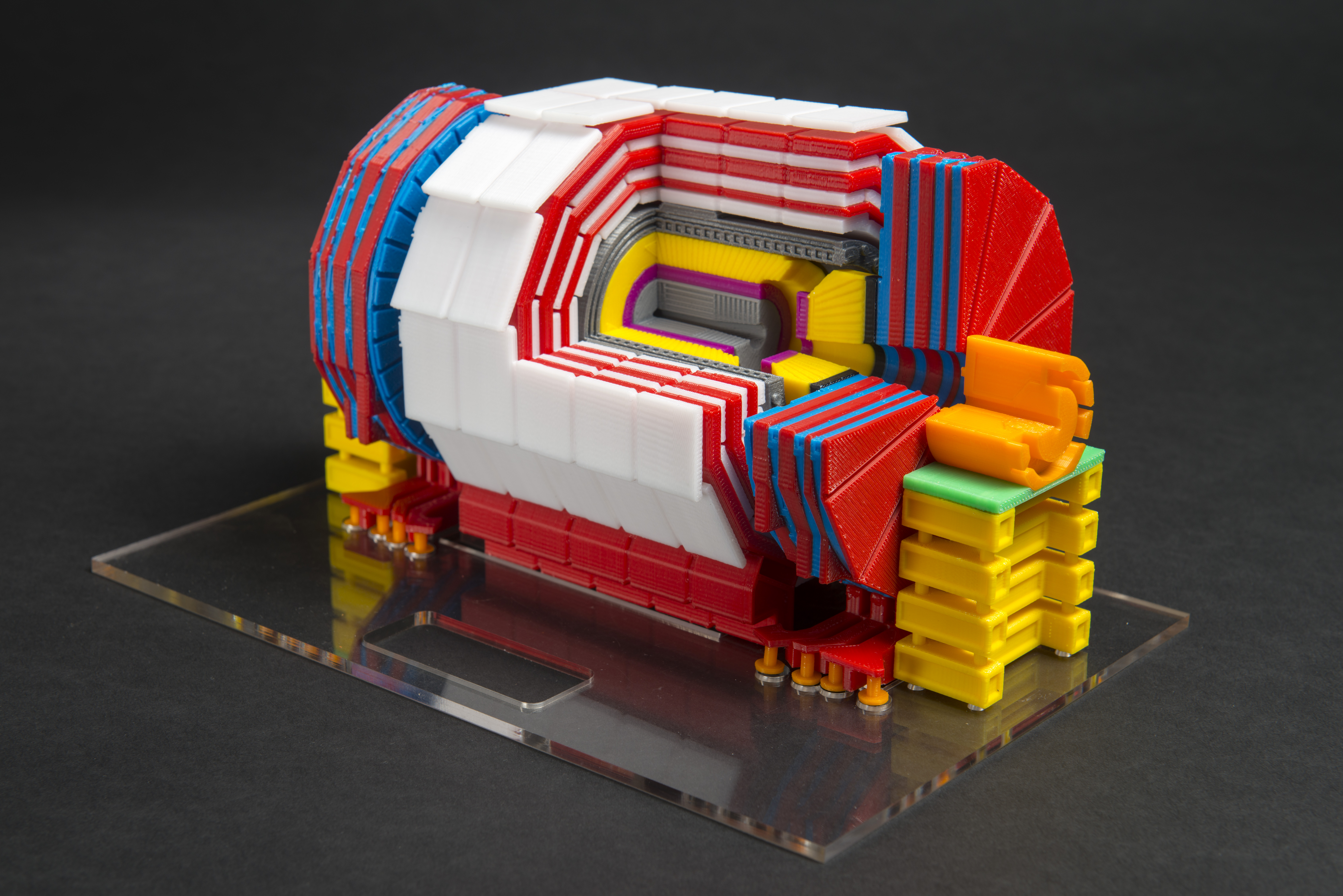
I wanted to make a model of the CMS experiment so that I could explain to my friends and family what I was up to! In fact, you can access the files to print it yourself here on printables or the originals here.
Ideally, l wanted one that looked like this sketch, where a quadrant was missing and you could see into the detector, so that you could point at the different layers and explain how the detector is constructed and what each subsystem does.
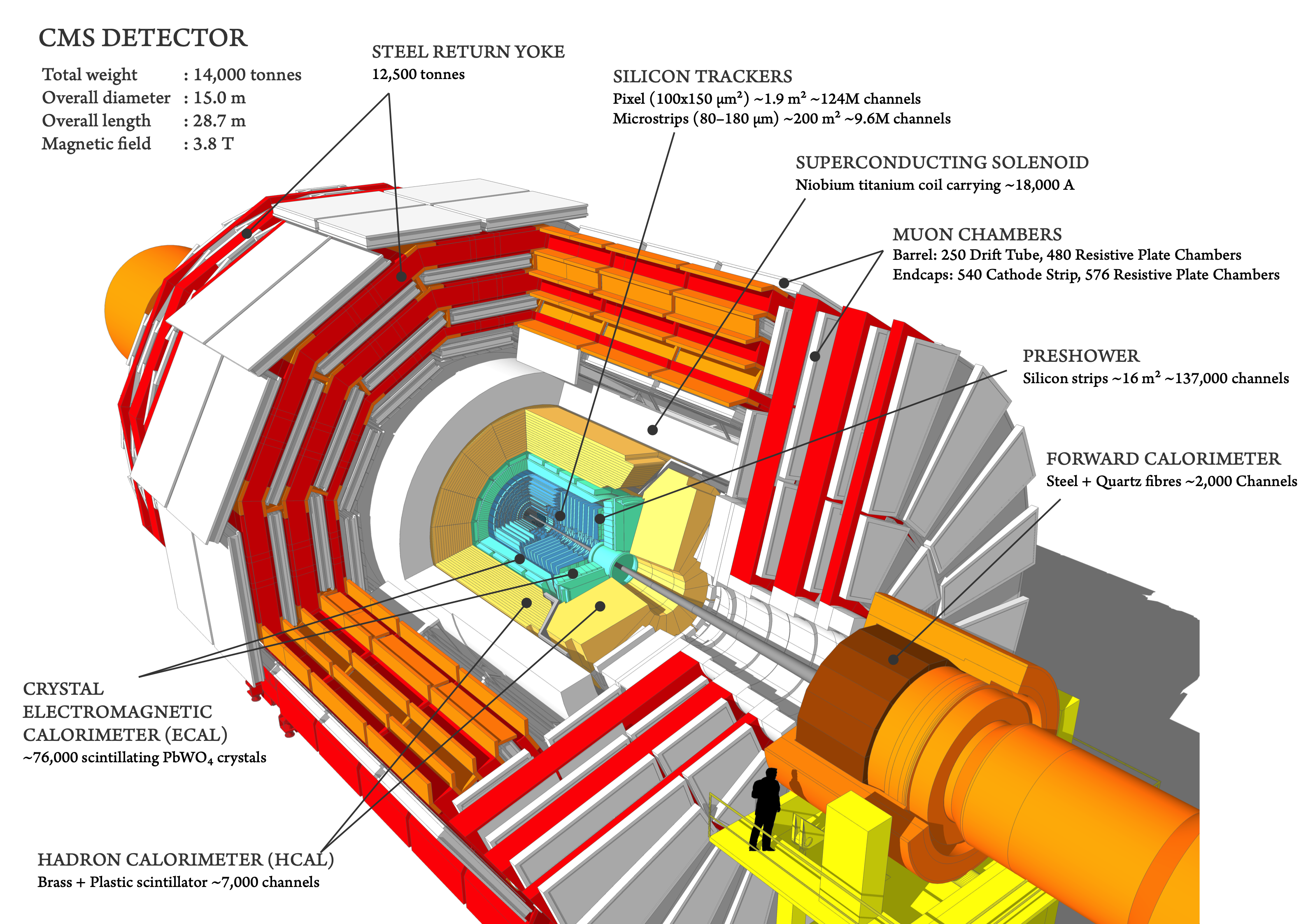
Don Lincoln at Fermi National Accelerator Laboratory sent out a grant opportunity to fund projects that would help educate the public about the CMS experiment, and I thought making a 3D printed CMS would be perfect!
I submitted a proposal to Fermilab requesting funds for a 3D printer in exchange for designing a 3D printable model and publishing the files online.
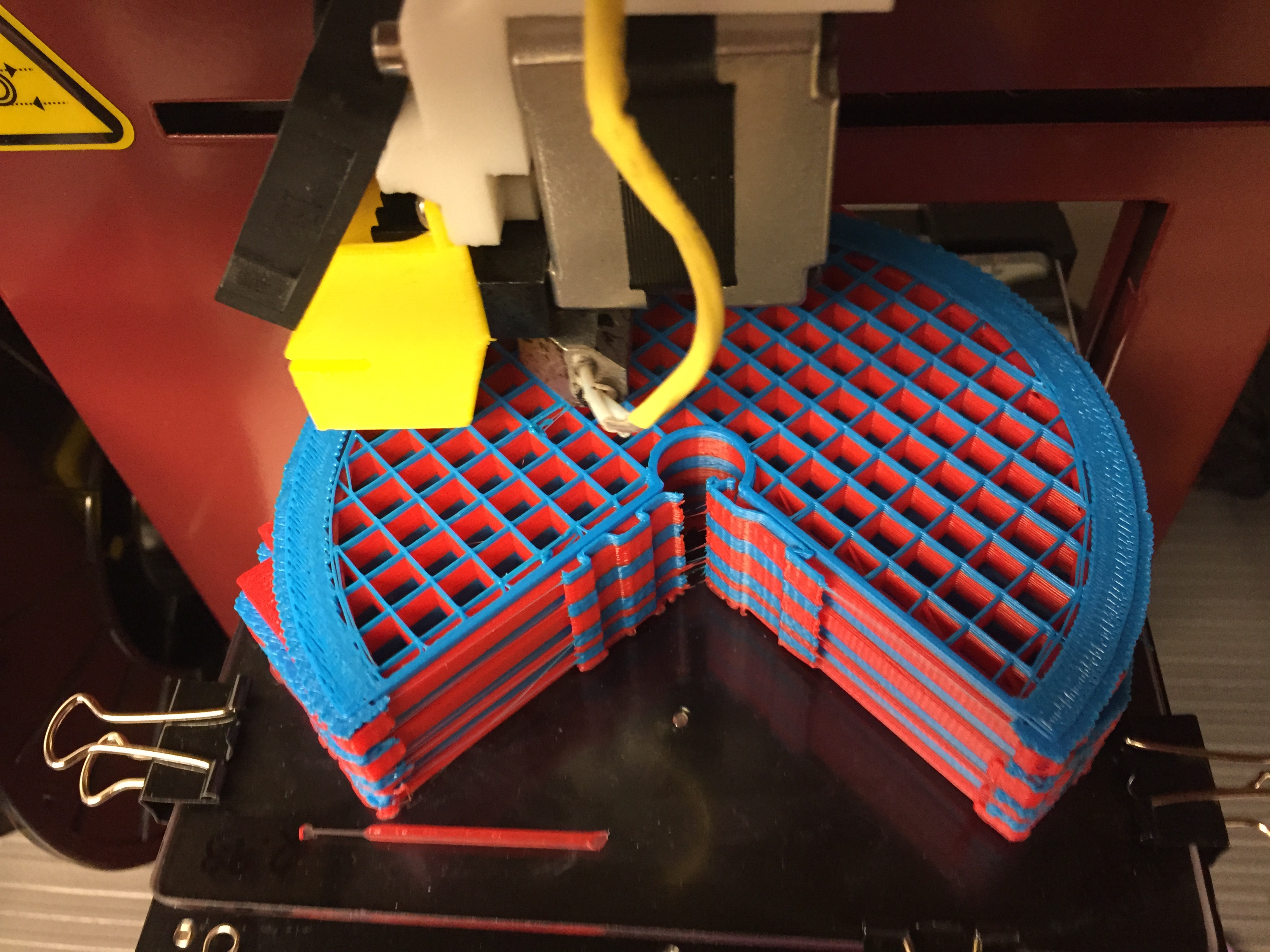
I modeled the detector to focus on the ‘main’ pedagogical components: the muon detectors, the iron return yokes, the solenoid, the calorimeters, etc, while trying to optimize the design to make it easy to 3D print.
After getting the grant and designing the model and 3D printing one of them, Don Lincoln asked me to make more than 100 of them, wanting to put one model at every USCMS affiliated college/university/institute, all of the major US funding agencies, members of congress, director general of CERN, etc.
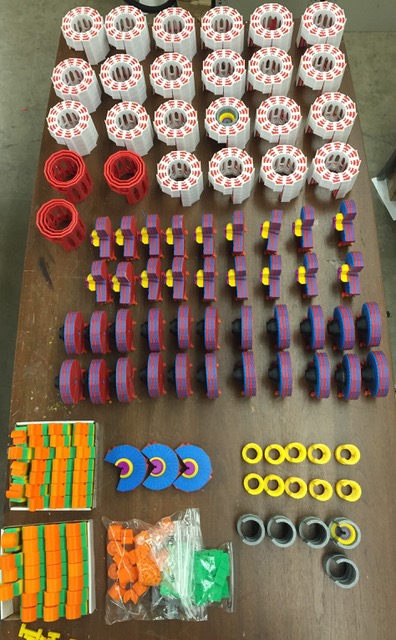
At the time, to print a model around 5 inches around and 10 inches wide meant approximately 50 hours of print time per model. Going to external companies was out of the question as they quoted me between $130,000 and $1 million for the prints!
So I tweaked the model with more optimizations to make it easier to mass produce, and 3D printed thousands of parts! Printing one of the originals took me about a month, and he wanted 100?! So I had a ton of modeling optimizations to do so I could produce 125 in 3 months.
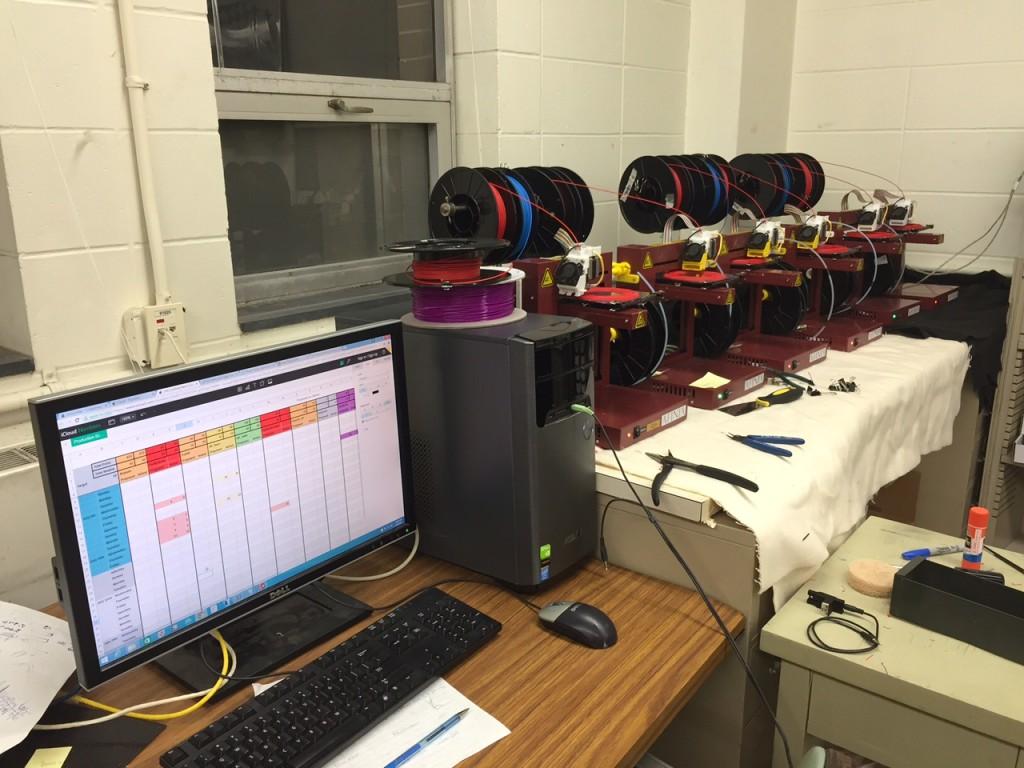
An undergraduate student at the time, Nick Arevalo, and my father W.G. Wetzel helped me make the prints on 6 Afinia H480 3D printers. We took shifts running the printers to make the 1400+ pieces for the models and then assembling the different parts as they became available.
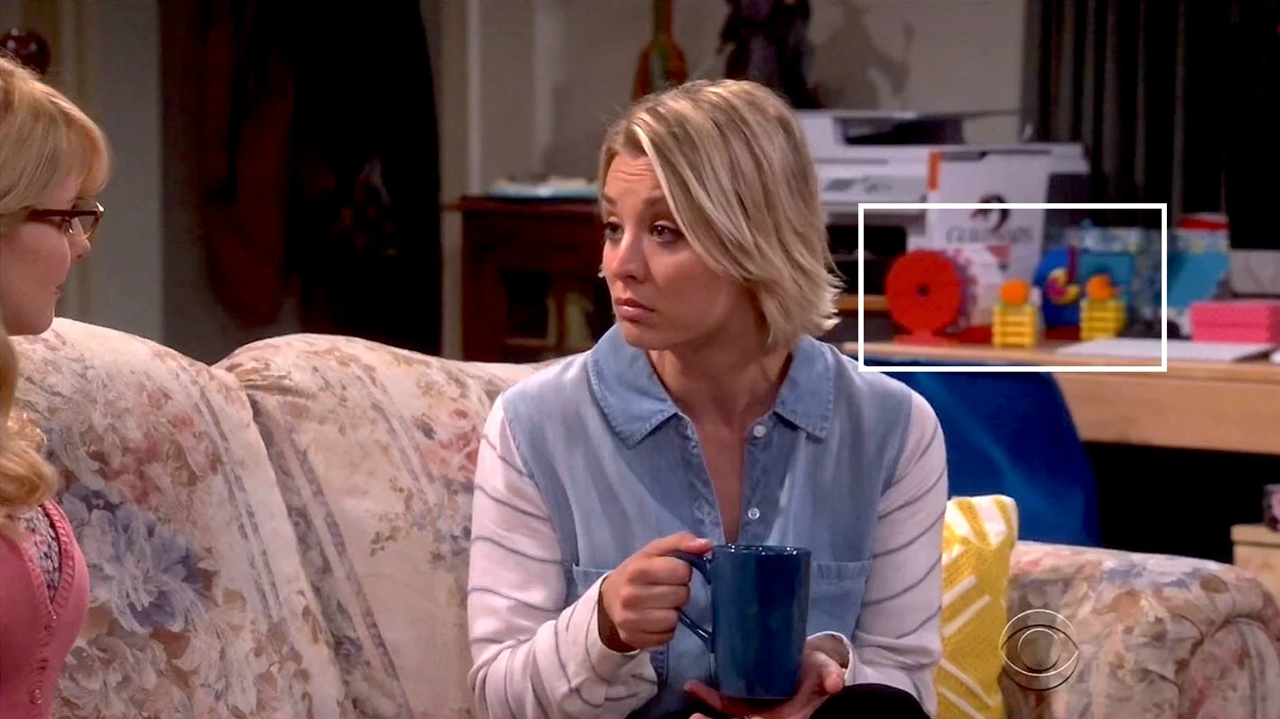
The models have made their way outside of CMS too! One of the models even ended up on what was at the time a very popular US television show "The Big Bang Theory", thanks to Don Lincoln and UCLA Professor David Saltzberg
Perhaps more incredibly, another is on display at the Nobel Prize Museum in Stockholm! As is tradition, Nobel laureates gift an item that is important to them to the museum that is then kept and displayed. Peter Higgs chose to donate one of the CMS 3D printed models when he received the Prize for his work on the Higgs boson, discovered by CMS and ATLAS in 2012.
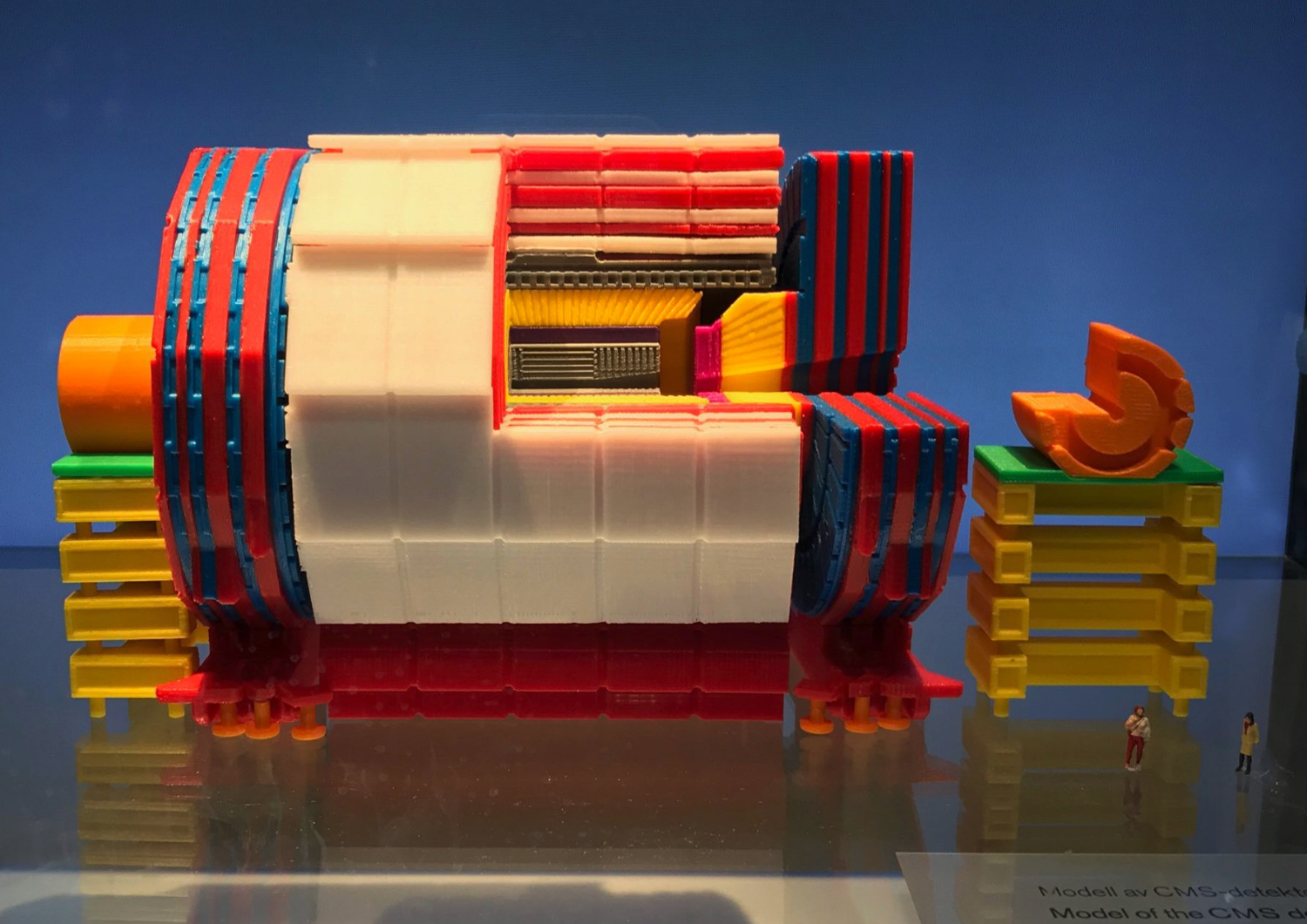
Alex Iribarren had reached out a few years after this project asking about printing a version for himself, and he grabbed the original files and made improvements, and made it public here.
There are now Mini Models too, which are scaled down and simplified versions of the larger one! You can find them here and here.
Seeing these models spark curiosity in classrooms and homes around the world reminds me why I fell in love with science in the first place—to make discovery something we can all see, touch, and share.
I look forward to seeing how the models can continue being used in the future!
Useful Links:
The optimised files for home printing the detector
Mini CMS detector files for home printing version 1
Mini CMS detector files for home printing version 2
An article written while the original prints were in production!