
Before this year, the only things I knew about Togo was its general location (West Africa) and that it was the home country of Emmanual Adebeyor (the footballer). I also associated Togo with Ketevi Assamagan (the physicist), who was raised and educated there and in my opinion deserves to be as famous as the former Arsenal and Manchester City striker. Ketevi is now based at Brookhaven National Laboratory in the USA but he continues to promote physics in Africa. He’s the co-founder of both the African School of Physics (ASP), which since 2010 has been educating hundreds of university students in Africa, and of the African Conference on Fundamental Physics and Applications (ACP), which began in 2018.
It was the ASP which brought me in 2016 to Kigali, Rwanda, where I helped out with the high-school program (organized by QuarkNet) that was associated with the school. We visited several high schools in and around Kigali, spoke to the students about particle physics, and coordinated several learning exercises. The energy and enthusiasm of the students was amazing. We spent a lot of time answering questions about physics, CERN, the LHC, how one becomes a physicist, and about life in general in the US, Switzerland, and the UK. I later helped develop some of the material for subsequent ASPs, but never made it back to Africa in-person.
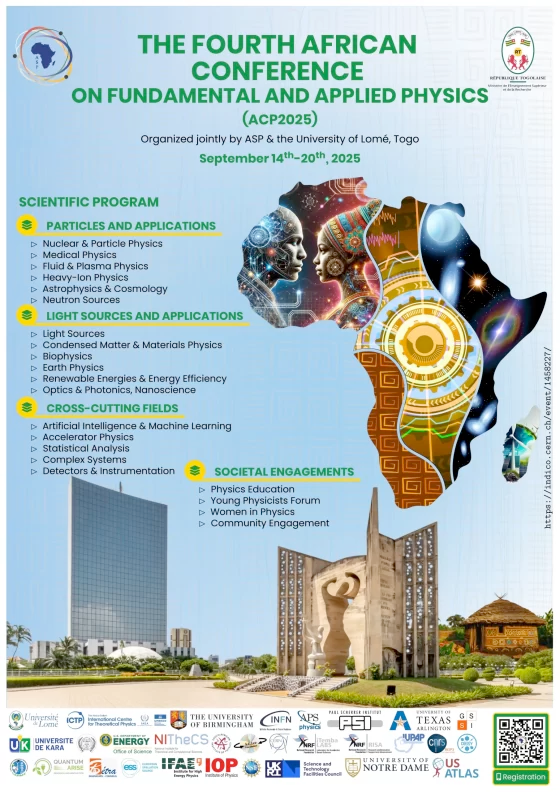
However, one of the great things about working at CERN is the serendipitous conversations that happen when friends and colleagues get together. I happened to have a chat with Kate Shaw (University of Sussex and ICTP), a physicist on the ATLAS experiment, and someone I knew very well from Rwanda and other education and outreach efforts. Kate does a lot of work with Physics Without Frontiers (PWF), which brings physics to the Global South. She mentioned the upcoming ACP in Togo and that perhaps CMS could contribute to an Open Data1 workshop that was planned to be at the end of the conference. The idea was to train lecturers and professors to use data from the ATLAS and CMS experiments that had been made public for use in university courses on particle physics, data analysis, and coding. I didn’t need much convincing (it helped that I am the co-coordinator of Open Data for CMS). I would
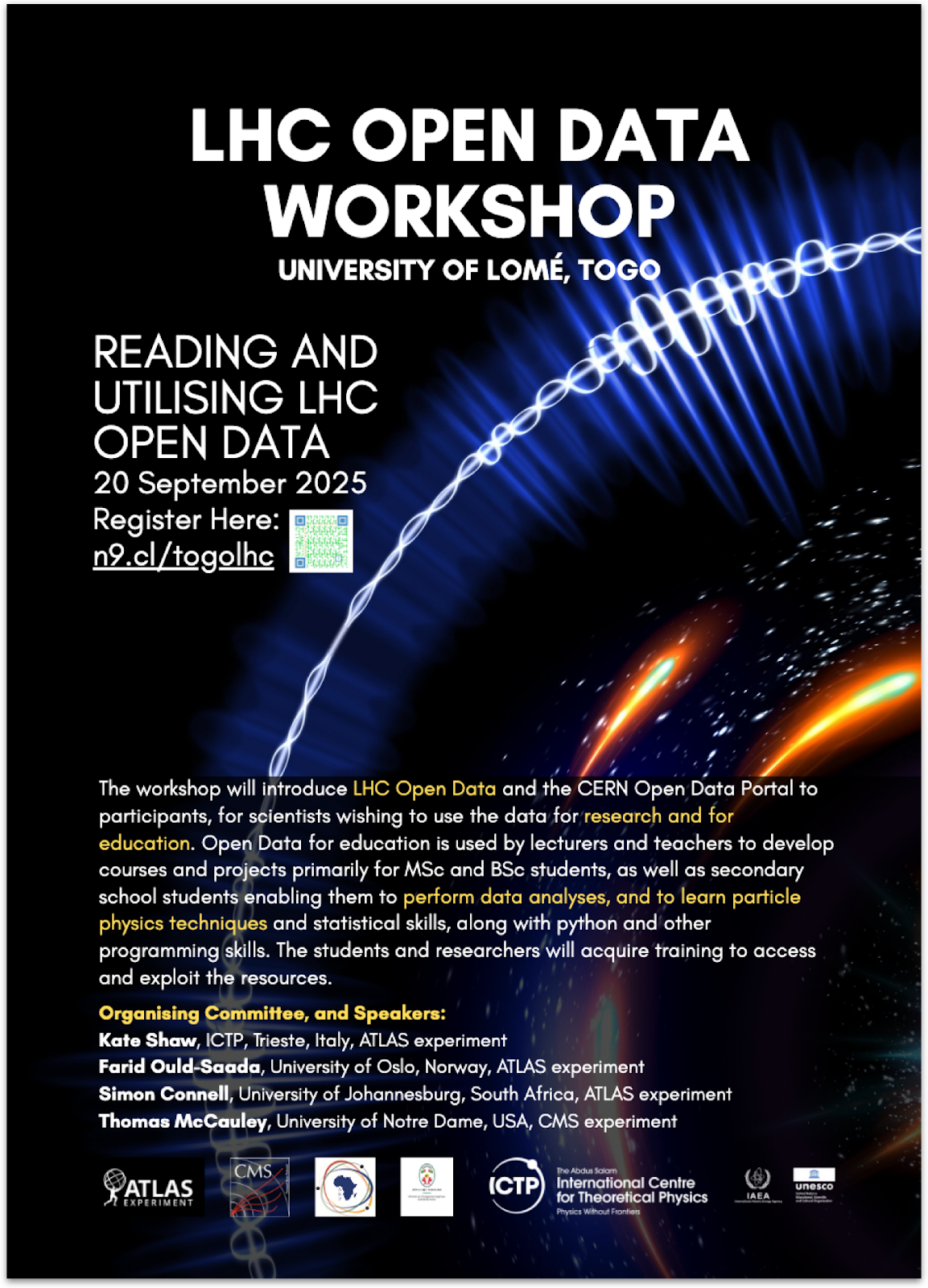
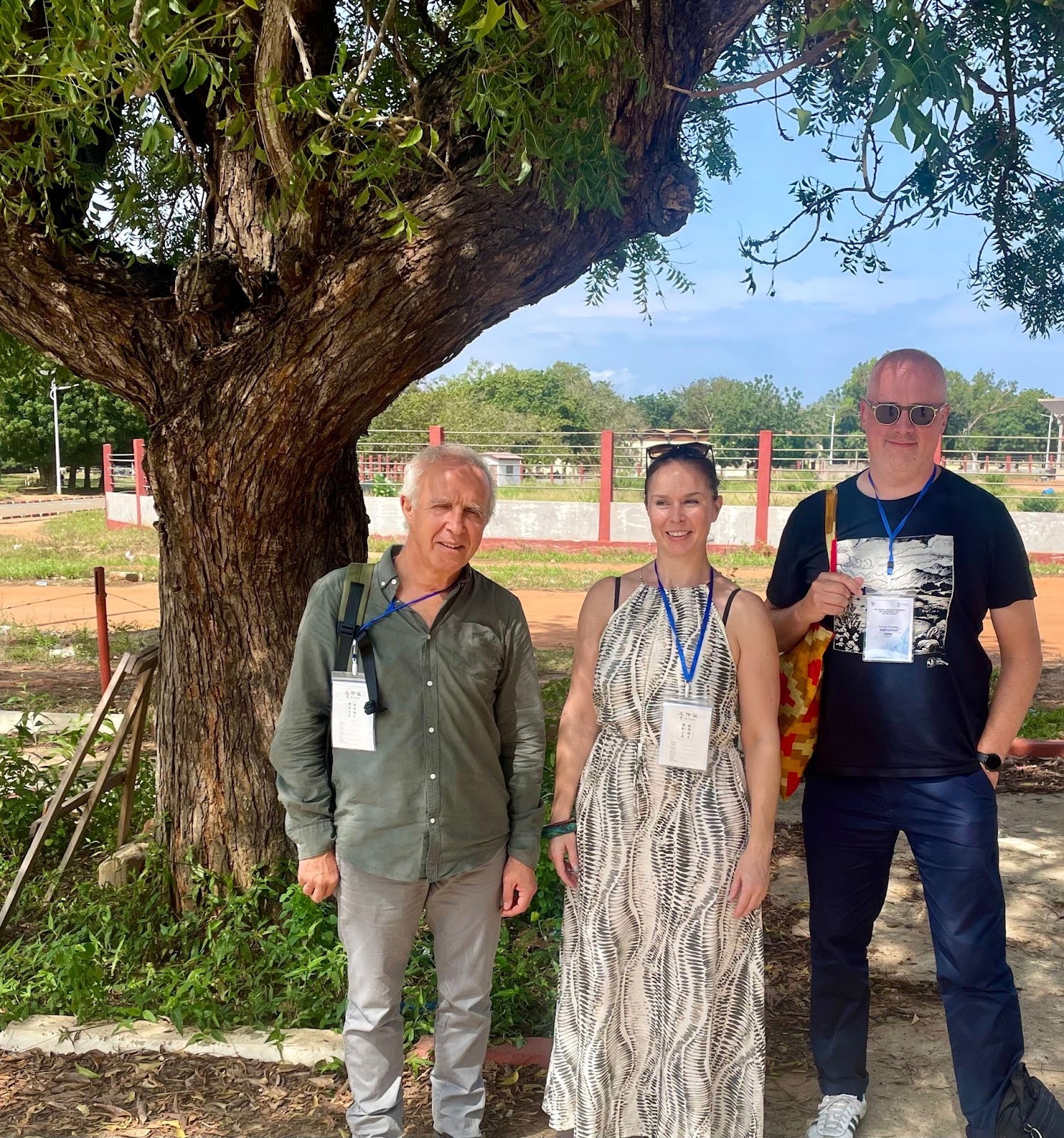
give a talk on CMS Open Data and help organize what was formerly the ATLAS Open Data Workshop and what had become the more ecumenical “LHC” Open Data Workshop. Once I obtained funding from CMS and confirmed that I could attend, we started planning. In Lome the in-person workshop facilitators would be Kate, myself, and Farid Ould-Saada (University of Oslo, ATLAS).
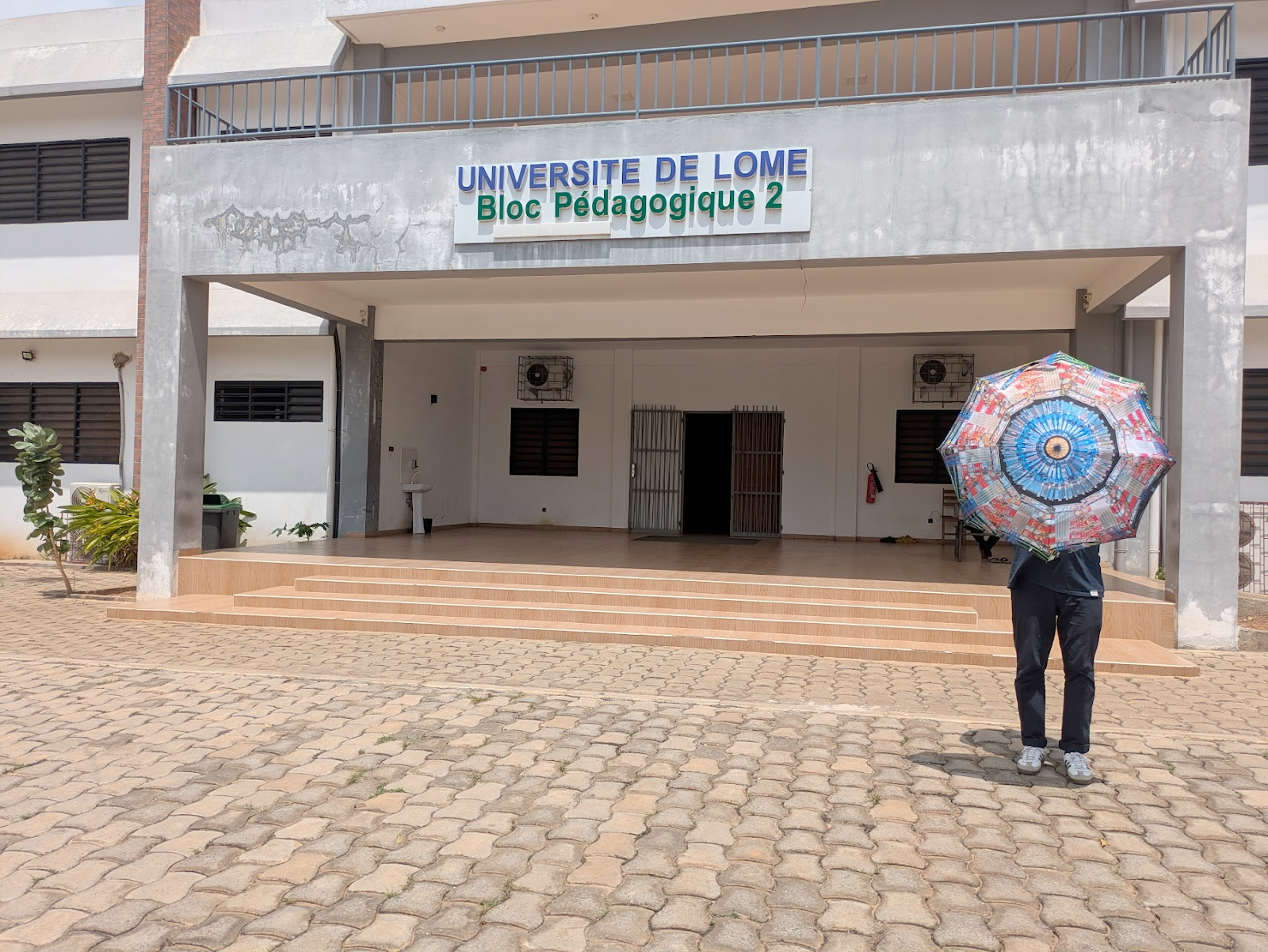
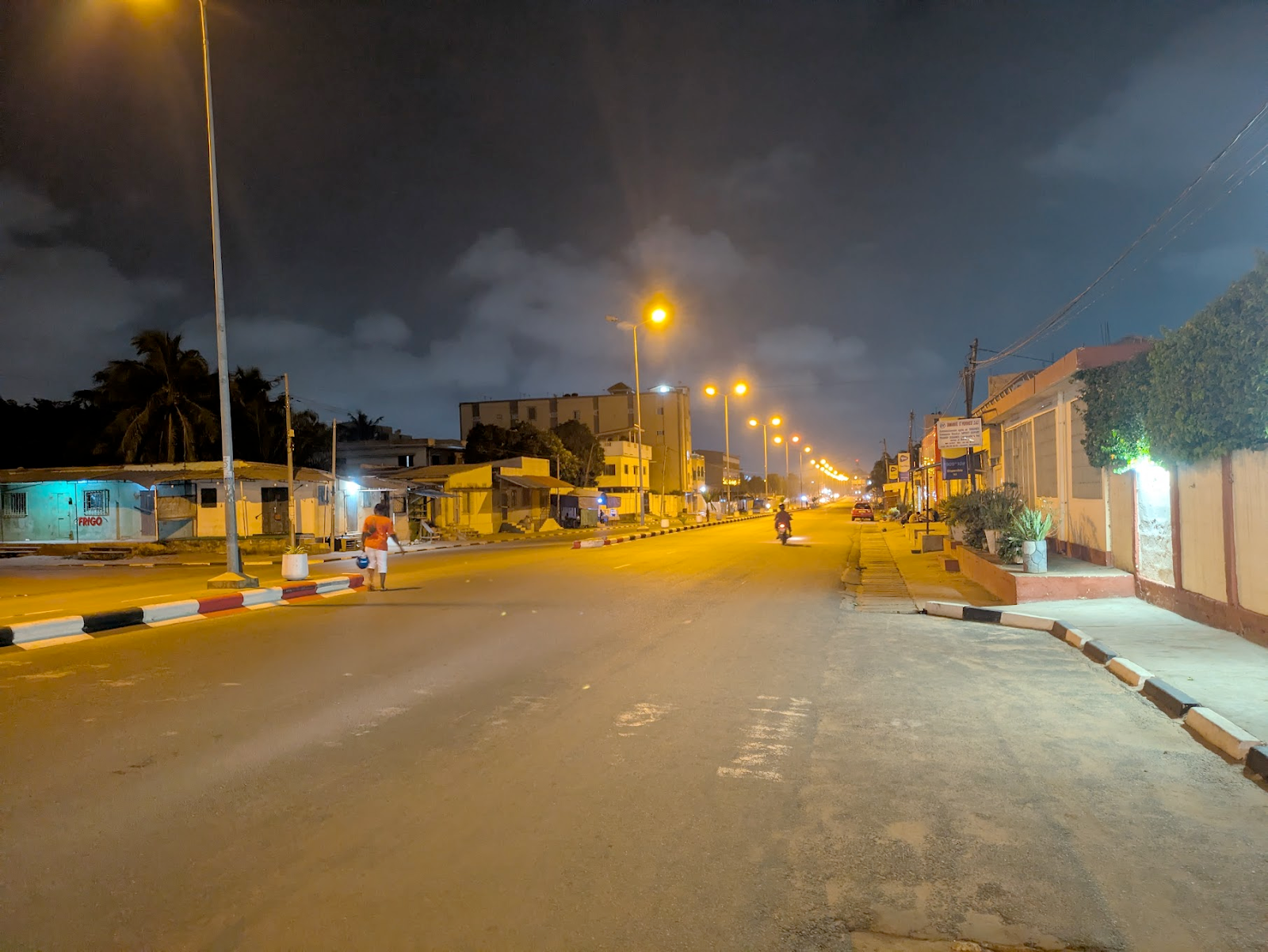
The conference was held at the University of Lome, which was a short ride from our hotel through the constant swarm of Lome traffic (driving in Lome must not be for the faint of heart). The scope of the conference was wide-ranging, and not restricted to particle physics. I particularly enjoyed the session on medical physics, a topic I knew next to nothing about. I now know slightly more.
During the week of the conference there was a parallel effort of preparing for the workshop. Much had been prepared already, but we had to secure and set up a room and refine and finalize the workshop material. The scope and audience had changed slightly from the original vision - most of the in-person participants were local students at the university. This meant that we had to change some of the material slightly but by the end of the week we were ready.
A feature of the conference (and one I’ve never seen before) was an ever-present photographer who took photos of the speakers as well as of the participants “in-action” while seated in the audience. During the breaks these photos were for sale, some framed. Despite a hard sell I resisted buying a photo of myself looking intently at the out-of-view current conference speaker (I must admit though that I was tempted to buy a large framed photo of myself and hang it in one of the many empty hallways of our large hotel and leave it there, but thought better of it).
Officially the conference ended on Friday, a day which included talks by Farid and myself on Open Data from our respective experiments, and a night which included the conference dinner. Hopefully what we said on Friday was a good-enough primer for the Saturday afternoon workshop. It began with a quick introduction, a remote talk by Pablo Saiz from CERN IT on CERN support for Open Data, including the CERN Open Data Portal, a talk and demonstration by Kate on ATLAS Open Data and a talk and demonstration by myself on CMS Open Data. The main event of the workshop was Farid’s hands-on tutorial using ATLAS data. He began with a brief lecture on particle physics, the LHC, CERN, and the experiments and then delved into an example analysis of ATLAS data. Farid, in addition to being a very good lecturer, also speaks fluent French, the main spoken language in Togo. (Despite being at CERN since 2007, situated in French-speaking Switzerland, I am not capable of delivering a lecture en francais, malheureusement). Kate and I handled questions on a very active Zoom chat for the remote participants. In total, there were over 50 participants in the room and around 20 participating on Zoom from all over Africa.
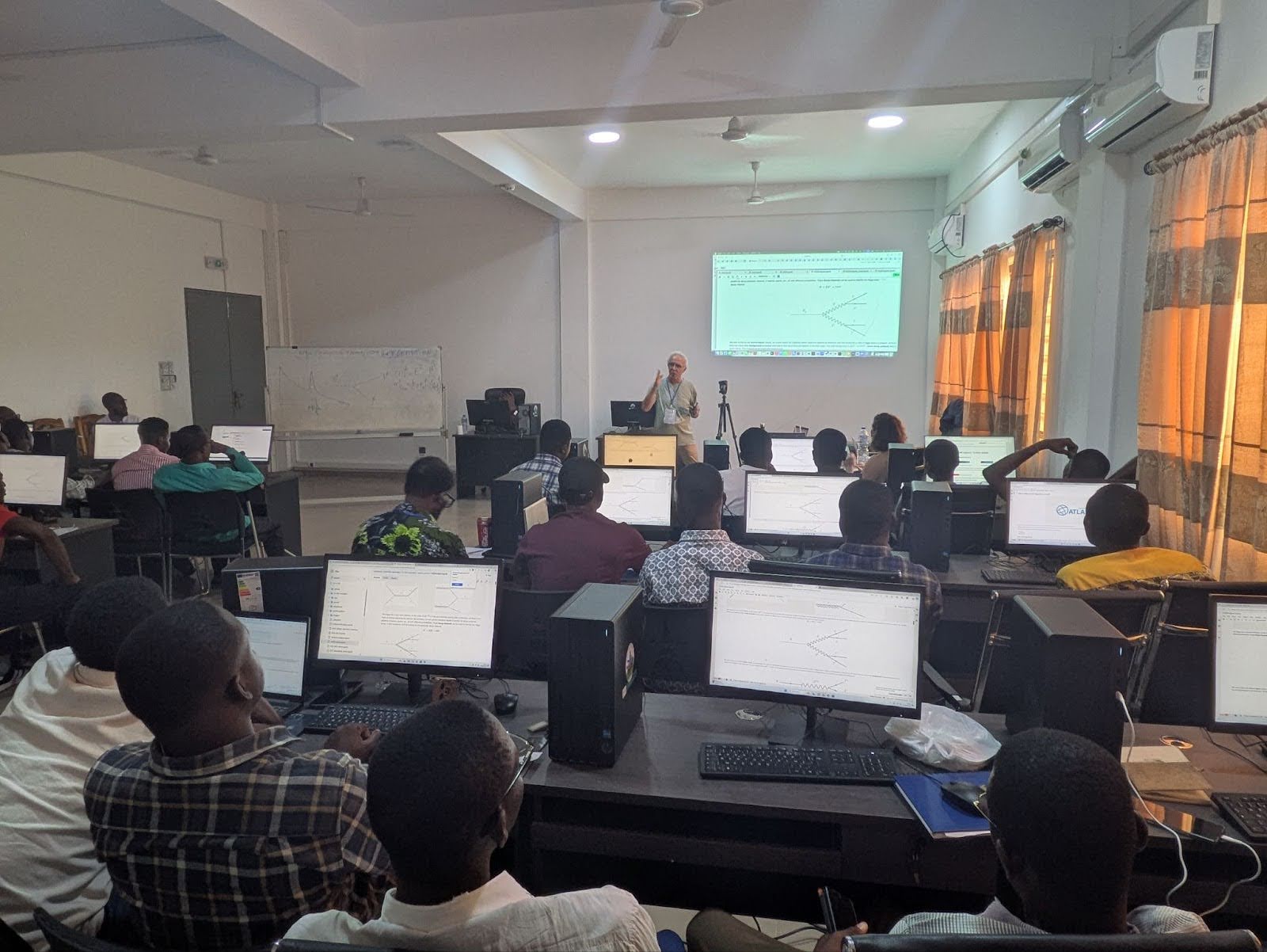
After Farid there was a brief wrap-up and we said our farewells. Many of the students took this as a signal to surround Farid and begin to ask more and more questions which he answered with an impromptu lecture using the whiteboard.
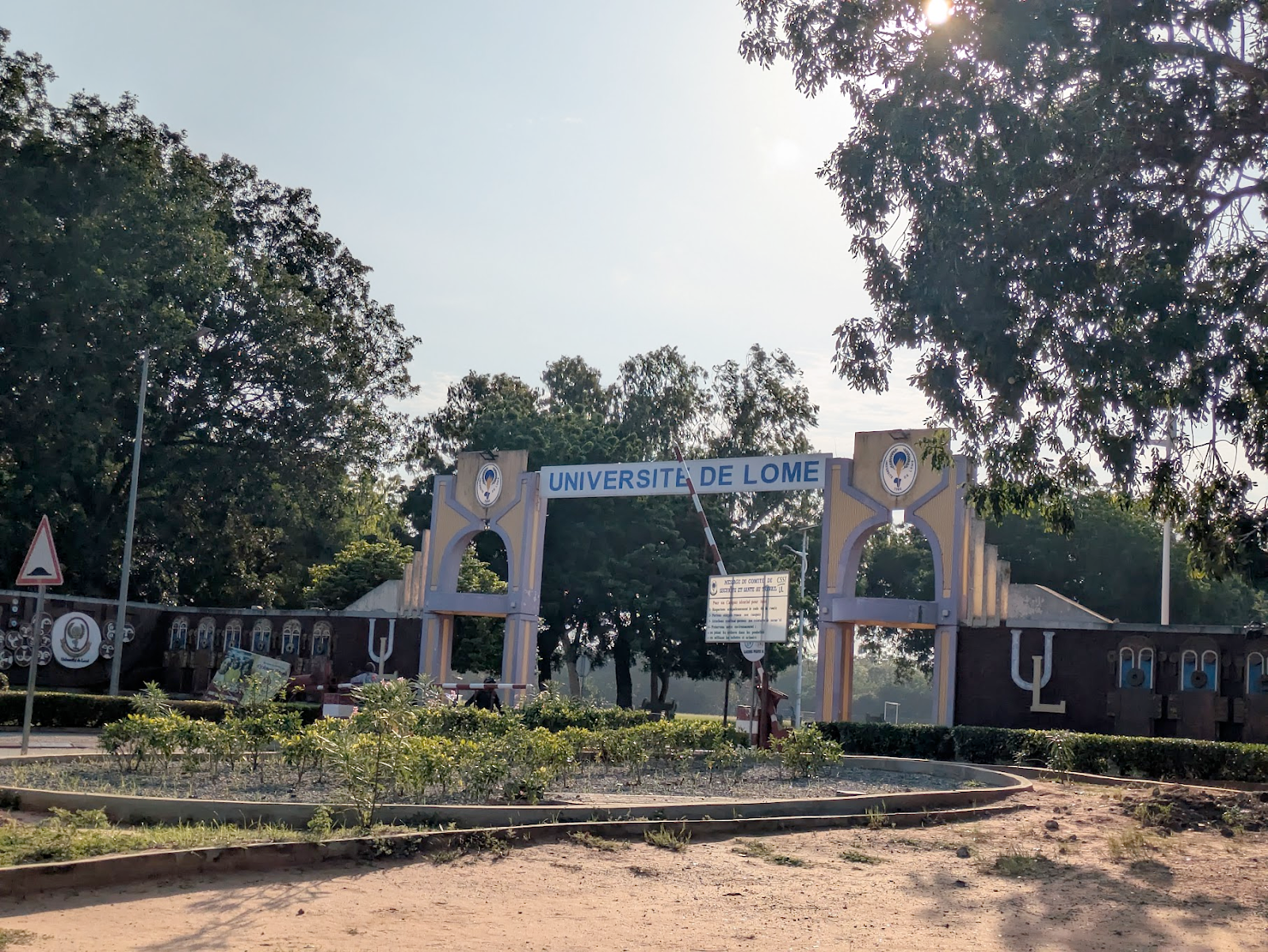
Eventually we had to drag him away in order to close up the room and leave the university for the last time. It was great collaborating with ATLAS, our friendly competitors across the LHC ring, on a common project.
The next day was finally a chance to see the city and then catch an overnight flight to Paris. I hope to return to Africa for one of the next schools or conferences. Hopefully our efforts to bring LHC data to the continent has helped the mission of promoting physics in Africa in some small way.
The author wishes to thank: the organisers of the ACP for a great conference and for enabling the workshop to take place, CMS for providing travel support, and ATLAS and PWF for workshop organisation.
1 “Open Data” describes the effort to make data from the LHC experiments available and accessible to anyone with minimal restrictions. Several years after the data are taken, CMS releases the data to the public via the CERN Open Data Portal along with documentation, analysis software, and other resources. Since 2014 CMS has released over 4 PB of data (real and simulated) from Run 1 and Run 2 of the LHC.
Disclaimer: The views expressed in CMS blogs are personal views of the authors and do not necessarily represent official views of the CMS collaboration.