
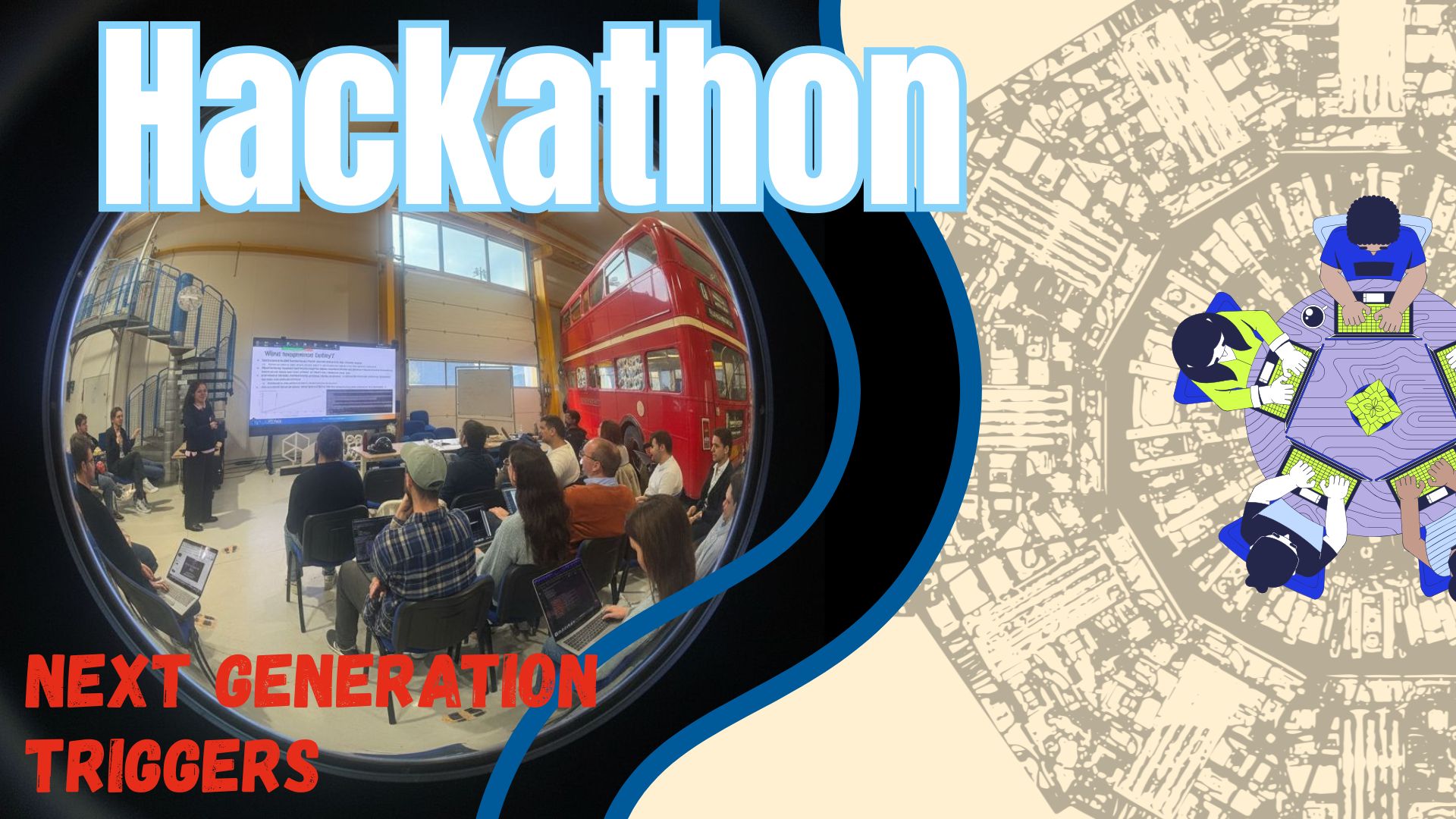
Hello, I’m Jessica Prendi and I’m a 25-year-old PhD student in the CERN Doctoral Programme from ETH Zürich. I started my PhD last October and my main project here is Optimal Calibration at the High-Level Trigger (HLT).
A few weeks ago, I attended the 2nd Next Generation Triggers (NGT) Hackathon with a clear goal in mind. We wanted to finalize the last missing puzzle piece for one of the milestones to be achieved within our project this year: the calibration leg of our NGT demonstrator. But let’s take a few steps back – what is the NGT demonstrator and what is the calibration leg?
Our NGT Demonstrator, which we lovingly call NERD (NExt-Gen Realtime Demonstrator), has a specific goal: we want to show that the plans the NGT project at HLT has for the Phase-2 upgrade are feasible within CMS. One of these goals is being able to store all the events the Level-1 Trigger selects in a physics-oriented format. In order to achieve that goal, several things need to be done, including bringing optimal calibrations to the HLT.
The main difference between the calibrations used for offline reconstruction and HLT reconstruction truly is the frequency of uploads. With constantly changing detector conditions, frequent snapshots of the environment during collisions are needed. However, deriving calibrations takes a lot of time, which we simply don’t have at HLT. One of the ideas that we propose to potentially solve this problem? Buffer the HLT input for a given time and derive the calibrations while that data is buffering! Now this is very ambitious, so we first need to show whether this would even be possible within CMS. And this is where the NERD comes in! The NERD wants to showcase that these plans for Phase-2 are feasible.
The milestone aims to show exactly that, that we can buffer data for a given time (we chose 8 hours), derive calibrations within that 8 hour time limit and run a delayed HLT process. This should all be done on top of what is already there at CMS and not interfere with regular CMS operations whatsoever. A key part of this demonstrator was developing a streamlined workflow to derive calibrations within the time limit.
And the goal for the Hackathon? Have a first version of a calibration loop that actually works! This was particularly challenging to me, as it required handling numerous corner cases that may appear during data taking operations. We decided to implement a Finite State Machine as our system architecture so that it can handle the different cases more robustly. And as expected, as we were testing our system “live“, we kept running into new corner cases we hadn’t thought of yet and had to account for in our software.
The hackathon was, however, the perfect opportunity to work on this. My team consisted of my CERN supervisor Marco Musich, the task leader Thiago Tomei, and me. Setting up such a calibration loop that is interconnected with each other and handles many different states is not very straightforward. Several brainstorming sessions within the team were needed to properly think through the logic we want to implement. Another great bonus of the hackathon was that other experts were present as well, so we could ask questions directly to them as well, e.g. fellow NGT PhD Student Simone R. Tisbeni, who also works on Automation for CMS Conditions. We really benefited from the collaboration and the teamwork and at the end of the week, we managed to achieve our goal of having a first working version of the calibration loop set in place.
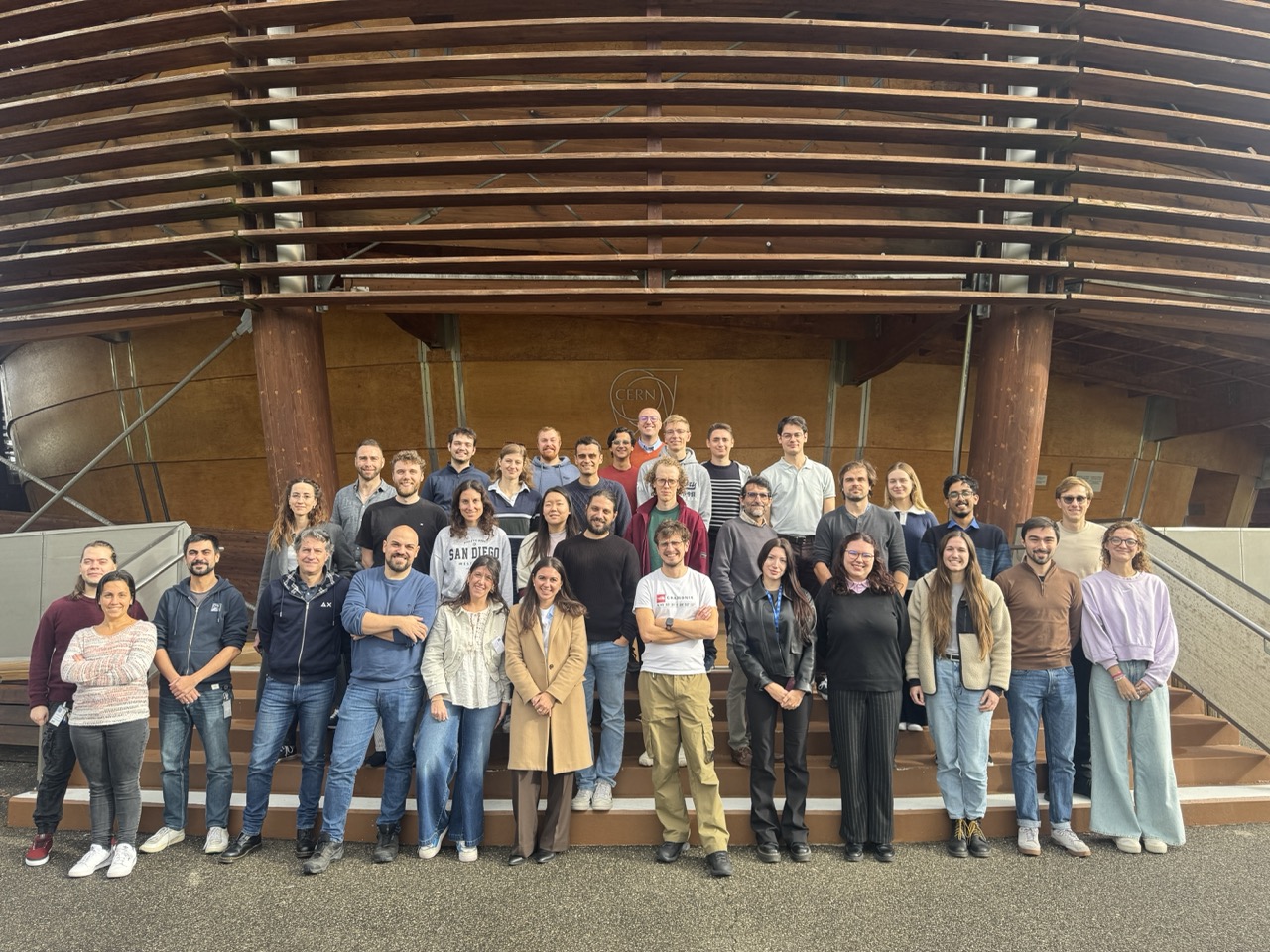
Indeed, it was an intense week, but the daily hackathon structure helped a lot with our work on the NERD. At the end of each day, we prepared presentations for the scrum session on the problems we faced, which helped us to reflect on what we did and what could be done better for the next day. It was a great way to take a step back every day and not get completely lost in tunnel vision.
Apart from the work side, the hackathon was also nice to get to know others during the coffee breaks, lunches, and the tasty social dinner we had at La Meyrinoise. The organisation of the NGT hackathon was truly top-notch and I recommend attending the next edition to everyone that has a big technical goal to achieve, as you might be able to exceed your own expectations ! ;)
Disclaimer: The views expressed in CMS blogs are personal views of the author and do not necessarily represent official views of the CMS collaboration.